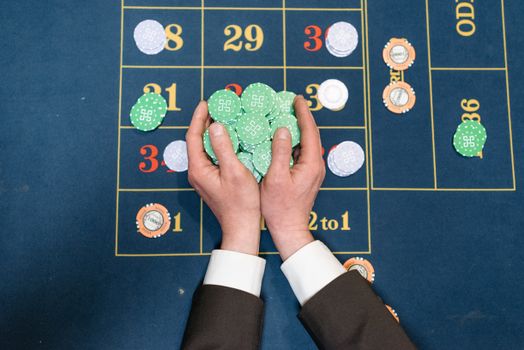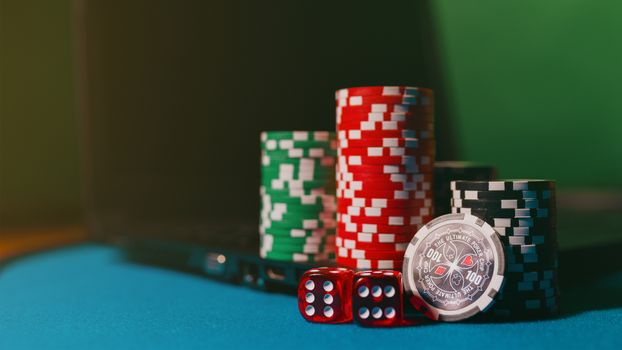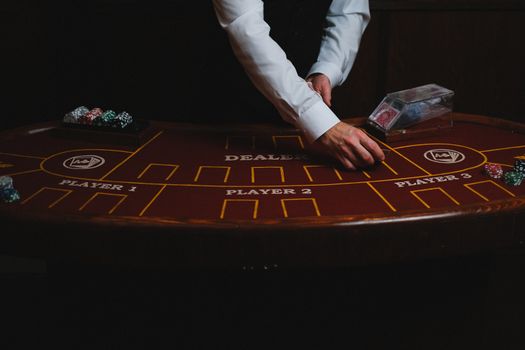
Casinos are more than just places to try your luck; they are carefully crafted environments designed to entice, excite, and keep people playing. From the flashing lights of slot machines to the anticipation of a roulette spin, the psychological allure of casinos is powerful—and universal. But what exactly draws us in and keeps us coming back, even when the odds are often stacked against us? By exploring the science and psychology behind gambling, we can better understand why casinos have such a magnetic pull on millions around the world.
The Evolutionary Roots of Gambling Behavior
Gambling is not a modern invention. Archaeological evidence shows that dice-like objects were used in Mesopotamia as early as 3000 BC, and betting games appeared in many ancient cultures. The urge to take risks and seek rewards is deeply embedded in human nature, shaped by millennia of evolution.
From a biological perspective, risk-taking had clear survival advantages for our ancestors. Taking calculated risks could lead to acquiring more resources, food, or mates. Modern gambling taps into these primal instincts. A study published in the journal "Neuron" in 2010 found that the human brain releases dopamine—a neurotransmitter associated with pleasure and reward—not just when we win, but also in anticipation of the possibility of winning. This anticipation can be as stimulating as the reward itself.
.png)
In a 2017 survey by the American Gaming Association, 33% of U.S. adults reported visiting a casino in the previous year—an estimated 104 million people. This widespread appeal points to a universal human attraction to risk, uncertainty, and potential reward.
The Casino Environment: Sensory Manipulation at Its Finest
Casinos are meticulously designed to stimulate the senses and keep players engaged. The interplay of lights, sounds, and even scents is no accident. For example, the “casino floor” layout is intentionally maze-like, with few clocks or windows, subtly encouraging patrons to lose track of time.
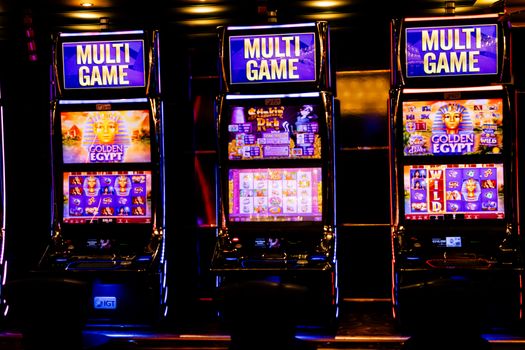
A 2013 study published in "Psychology & Marketing" discovered that citrus scents in casinos could increase slot machine usage by up to 45%. The lighting is engineered to create a perpetual dusk, a time of day associated with activity and excitement. Slot machines, responsible for nearly 70% of casino revenue in the U.S., use vibrant visuals and celebratory sounds to create a sense of constant winning, even when the payouts are small.
Additionally, the presence of other people winning—or appearing to win—triggers a phenomenon known as “social proof.” Seeing others succeed encourages us to believe that we, too, can win, making us more likely to keep playing.
The Psychology of Near Misses and Variable Rewards
One of the most powerful psychological mechanisms at play in casinos is the concept of the “near miss.” In slot machines and games like roulette, players often come very close to winning—a cherry just above the payline, or the ball landing one slot away from their chosen number. Research from the University of Cambridge in 2009 revealed that near-misses activate the same brain regions as actual wins, fueling the urge to keep gambling.
Casinos also employ “variable ratio reinforcement schedules,” a concept borrowed from behavioral psychology. Unlike a predictable reward system, variable rewards are delivered at irregular intervals. B.F. Skinner’s experiments in the 1950s showed that rats pressed levers more eagerly when rewards were unpredictable—a principle now used in slot machines, where wins are random and rare, but always possible.
This unpredictability creates a psychological state known as “intermittent reinforcement,” which is far more addictive than regular, predictable rewards. It’s the same principle that keeps people checking their phones for notifications or scrolling through social media feeds.
The Role of Illusions and Cognitive Biases
Our brains are wired to see patterns, even where none exist. This tendency, known as “apophenia,” is especially pronounced in gambling environments. Players often believe in “hot streaks,” “lucky numbers,” or “winning systems,” even though each game outcome is statistically independent.
Cognitive biases such as the “gambler’s fallacy”—the belief that a streak of losses means a win is due—lead people to make irrational bets. In a famous 1913 incident at the Monte Carlo Casino, the roulette ball landed on black 26 times in a row. Gamblers lost millions betting that red was “due,” a classic example of this fallacy.
Another bias is “illusion of control,” where players feel they can influence the outcome of games of pure chance. For instance, many craps players throw dice in elaborate ways, believing their technique affects the result. In reality, casino games are designed so that skill has minimal impact on outcomes.
Comparing Gambling Motivation: Fun, Escape, and Compulsion
Not all casino visitors are motivated by the same psychological factors. Some play for fun and social interaction, while others are driven by stress, financial goals, or even compulsion. Understanding these motivations is crucial for recognizing both the healthy and potentially harmful sides of gambling.
The table below summarizes key differences among major gambling motivations:
| Motivation | Characteristics | Prevalence (%) | Associated Risks |
|---|---|---|---|
| Entertainment & Socializing | Seeking fun, excitement, and social connection | ~50% | Low |
| Escape & Stress Relief | Using gambling to avoid life’s problems or negative emotions | ~30% | Moderate |
| Financial Gain | Gambling as a means to make money or solve financial issues | ~15% | High |
| Compulsive Gambling | Repeated, uncontrollable urge to gamble despite negative consequences | ~5% | Very High |
According to the National Council on Problem Gambling, about 1-2% of U.S. adults (roughly 4-8 million people) meet criteria for gambling addiction, while another 2-3% (6-9 million) are considered “problem gamblers” at risk for developing an addiction.
The Social and Emotional Rewards of Gambling
Beyond financial incentives, gambling offers powerful social and emotional rewards. For many, casinos are places to bond with friends, celebrate special occasions, or simply enjoy a sense of community. The ritual of playing together, cheering wins, and commiserating losses can create strong social ties.
Casinos often reinforce this sense of belonging with loyalty programs, special events, and VIP treatment. According to a 2022 report by the American Gaming Association, 77% of casino visitors rated the overall experience—including food, entertainment, and social atmosphere—as equally or more important than gambling itself.
For some, gambling provides an escape from boredom, routine, or emotional distress. The thrill of risk-taking can trigger a “flow state,” where players lose themselves in the game and temporarily forget life’s problems. This can be beneficial in moderation but becomes risky when used as a primary coping mechanism.
Final Thoughts on the Psychological Allure of Casinos
The allure of casinos is a complex tapestry woven from evolutionary instincts, sensory stimulation, unpredictable rewards, cognitive biases, and powerful social dynamics. While most people gamble for entertainment and can do so responsibly, a significant minority are vulnerable to the psychological traps that casinos expertly exploit.
Understanding the science behind why we gamble can empower individuals to make more informed choices and enjoy the excitement of the casino floor without falling prey to its hidden dangers. As our understanding of gambling psychology grows, so too do the opportunities for education, prevention, and support for those at risk.