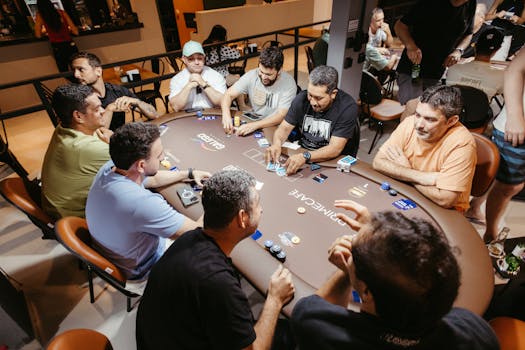
Reading Poker Faces: Unlocking the Secrets of Nonverbal Communication at the Poker Table
Poker is often described as a game of skill, strategy, and luck. But beneath the surface, poker is also a game of psychology—a high-stakes contest where players constantly try to interpret and mislead one another. The ability to "read" a poker face, or to decipher the subtle cues and gestures that reveal what a player is truly thinking, is one of the most coveted skills at the table. This art goes far beyond mere observation; it involves understanding human behavior, nonverbal communication, and even a bit of science. In this comprehensive guide, we’ll explore how to master the art of reading poker faces, drawing on research, real-world examples, and practical techniques.
The Science Behind Poker Faces and Tells
To truly appreciate the art of reading poker faces, it’s essential to understand the science behind nonverbal communication. According to research from UCLA, approximately 55% of communication is nonverbal, while only 7% is conveyed through words and 38% through vocal elements such as tone and inflection. In high-pressure environments like poker tables, players often attempt to neutralize their facial expressions to avoid giving away information—a practice so common that the term "poker face" has become synonymous with emotional concealment.
However, even the most disciplined players can inadvertently reveal "tells"—unintentional signals that betray their hand strength or emotional state. These tells can be physical (twitches, micro-expressions, sweating), verbal (changes in speech patterns), or behavioral (betting rhythms, hesitation). A 2012 study from the University of California, Berkeley found that even amateur players could detect subtle tells with above-average accuracy after just a few hours of observation, while professional players could identify tells in up to 80% of cases.
.png)
Key Facial Cues and What They Reveal
The face is a rich source of information, and experienced poker players learn to decode its signals quickly. Here are some of the most common facial cues and what they might indicate:
1. Micro-Expressions: These fleeting facial movements, lasting just 1/25th of a second, often reveal genuine emotions. For example, a quick flash of fear or excitement might indicate anxiety about a bluff or confidence in a strong hand. 2. Eye Movements: Darting eyes or avoiding eye contact can be signs of discomfort or deceit. Conversely, a steady, unblinking gaze might be an attempt to appear confident—sometimes overcompensating for a weak hand. 3. Lip Compression: Pressing the lips together can signal stress, as the player tries to suppress emotional reactions. This is often seen when a player is faced with a tough decision or is bluffing. 4. Smiling or Grinning: A genuine smile (involving the eyes as well as the mouth) may indicate relaxation or contentment, while a forced smile can be a mask for nervousness. 5. Pupil Dilation: Although difficult to spot without close observation, dilated pupils can be a physiological response to excitement or adrenaline, often occurring when a player holds a strong hand.Beyond the Face: Body Language and Behavioral Patterns
While facial cues are vital, the body often speaks just as loudly at the poker table. Some classic body language tells include:
- Shaking or Fidgeting: Nervous energy can cause players to tap their fingers, shake their legs, or fidget with chips. - Posture Changes: Players who suddenly sit up straight or lean forward may have received an exciting card. Conversely, slumping or shrinking can indicate weakness. - Chip Handling: Handling chips smoothly and confidently can display comfort, while fumbling may betray anxiety. - Breathing Patterns: Rapid or shallow breathing can be a sign of stress, often accompanying significant betting decisions.Understanding these nonverbal cues is not about spotting a single gesture; rather, it’s about noticing changes in behavior, especially in response to key moments in the game. Experts recommend establishing a "baseline" for each player—observing how they act during routine hands, and then noting deviations when the stakes rise.
Common Poker Tells: Strength vs. Weakness
To help demystify the process, here is a comparison table of common poker tells and what they might suggest about a player's hand strength:
| Poker Tell | Indicates Strength | Indicates Weakness |
|---|---|---|
| Sudden Stillness | Often | Rarely |
| Shaky Hands | Sometimes | Often |
| Quick Bet | Often | Rarely |
| Heavy Swallowing | Rarely | Often |
| Staring Down Opponent | Sometimes (as a bluff) | Sometimes (overcompensating) |
| Chip Splashing | Often | Rarely |
| Looking Away | Rarely | Often |
Keep in mind that no tell is foolproof. The most successful players use a combination of tells and context, considering how each player behaves in different situations.
The Dangers of Relying Too Much on Poker Face Reading
While reading poker faces can give you an edge, it’s important not to become overconfident. There are several pitfalls to avoid:
- Reverse Tells: Skilled players deliberately fake tells to mislead their opponents. For example, acting nervous with a strong hand, or appearing relaxed with a bluff. - Cultural Differences: Nonverbal behavior can vary significantly across cultures. A gesture that means anxiety in one culture could mean something entirely different in another. - Personal Idiosyncrasies: Some players have unique habits or "ticks" unrelated to their cards. Without a solid baseline, you might misinterpret these as meaningful tells. - Online Play: In digital poker rooms, facial and physical tells are largely absent, shifting the focus to betting patterns, timing, and chat behavior.A balanced approach is key: always combine nonverbal cues with logical analysis, probability, and betting history.
Real-World Examples: Legendary Poker Face Moments
Poker history is filled with iconic moments where reading a face—or maintaining a perfect poker face—made all the difference. Here are a few famous examples:
1. Chris Moneymaker vs. Sam Farha (2003 World Series of Poker): In one of the most televised poker hands ever, amateur Chris Moneymaker bluffed Farha off a better hand. Moneymaker’s calm demeanor and steady gaze hid his weak cards, ultimately winning him the championship and sparking the poker boom. 2. Daniel Negreanu’s Table Talk: Renowned for his ability to "read souls," Negreanu often verbalizes his thought process, coaxing reactions from opponents. He pays close attention to their micro-expressions and body language, once correctly folding a strong hand after reading a subtle tell. 3. Annie Duke’s Sunglasses: Some players, like Annie Duke, famously wear sunglasses or hats to conceal their eyes and facial movements, minimizing the risk of giving away tells.These examples illustrate that while reading poker faces can be pivotal, so too can mastering your own nonverbal signals to avoid being read.
Sharpening Your Poker Face Reading Skills
Anyone can improve their ability to read poker faces with practice, observation, and a bit of self-awareness. Here are some actionable steps:
- Study Players: Watch televised poker tournaments and pay close attention to players’ faces during big hands. Pause and replay key moments to spot micro-expressions or changes in posture. - Practice Live: In casual games, focus on observing rather than just playing. Try to predict players’ hands based on their nonverbal cues before the cards are revealed. - Take Notes: Keep a log of common tells you spot, and note which ones are reliable for specific players. - Learn from Experts: Books like "Caro’s Book of Poker Tells" by Mike Caro and "Reading Poker Tells" by Zachary Elwood offer deep dives into the psychology of poker. - Control Your Own Tells: Practice maintaining a neutral expression in front of a mirror, or use video recordings to analyze your own reactions.Over time, you’ll develop an intuitive sense for when something "feels off" at the table—a sixth sense that separates casual players from true poker artists.
Final Thoughts on the Art of Reading Poker Faces
The art of reading poker faces is a blend of science, psychology, and intuition. While no single tell can guarantee a win, combining nonverbal observation with logical reasoning can give you a significant edge. As poker continues to evolve both online and offline, mastering this skill remains as crucial—and as fascinating—as ever. Whether you’re an aspiring pro or a weekend enthusiast, honing your ability to interpret (and conceal) poker faces will enhance not only your game, but also your understanding of human nature.