Roulette’s Journey Through Time: Tracing the Origins and Evolution of the Iconic Casino Game
Few casino games carry the mystique and historical intrigue of roulette. With its spinning wheel and the clatter of the ball, roulette has captivated players for centuries, becoming a symbol of both chance and sophistication. But how did this iconic game come to be, and what cultural and technological forces shaped its development? In this article, we’ll embark on a journey through time to unravel the rich, surprising history of roulette—from its murky origins to its place in today’s global gaming landscape.
The Birth of Roulette: From Philosophical Toy to Gambling Sensation
The word “roulette” comes from the French for “little wheel,” but the game’s roots are even deeper and more complex than its Gallic name suggests. Historians often trace roulette’s invention to mid-18th century France, but its story weaves through mathematics, physics, and even religious ritual.
.png)
The earliest precursor to the roulette wheel is often attributed to Blaise Pascal, the renowned French mathematician and philosopher. In the 1650s, Pascal was attempting to create a perpetual motion machine—a device that could spin forever without energy input. While his quest was ultimately impossible, Pascal’s experiments produced a spinning wheel remarkably similar to the modern roulette device.
By the early 18th century, various spinning wheel games had emerged across Europe, combining elements from Italian games like Biribi and Hoca and the English game Roly-Poly. The first explicit references to roulette as a gambling game appear in French records from 1758, specifying prohibited games in New France (now Quebec).
Roulette's Rise in 19th Century Europe: The Monte Carlo Connection
Roulette’s evolution gained momentum in the 19th century, particularly as European societies relaxed some of their gambling restrictions. The game flourished in the opulent casinos of Paris, but its most significant leap came with the founding of the Casino de Monte-Carlo in 1863.
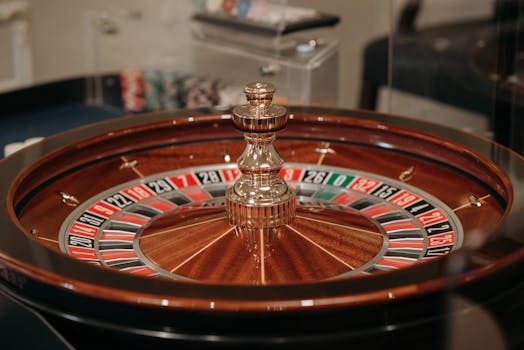
The modern single-zero roulette wheel, a hallmark of European roulette, was developed by François and Louis Blanc. The Blanc brothers introduced this version in the German spa town of Bad Homburg in 1842, offering a more favorable house edge compared to the double-zero wheels popular in France. When gambling was banned in Germany, the brothers moved to Monaco, transforming Monte Carlo into the epicenter of elite European gambling.
By the late 19th century: - Monte Carlo’s casino attracted aristocrats, royalty, and tourists from around the world. - The single-zero wheel became the standard for European roulette. - The house edge for single-zero roulette stood at about 2.7%, compared to 5.26% for the double-zero variant.Roulette’s allure grew through its association with glamour, mathematics, and the “devil’s game” myth—some pointed out that all the numbers on the wheel add up to 666.
Crossing the Atlantic: Roulette in America
As roulette made its way to the United States in the early 19th century, the game underwent significant changes to suit the tastes and business needs of American gambling houses. American casinos adopted a wheel with an extra “double zero” (00) slot alongside the single zero, increasing the house edge and boosting casino profits.
By the mid-1800s, roulette was a staple of riverboat gambling along the Mississippi and in the burgeoning casino scene of New Orleans. American roulette became the standard across the country, characterized by: - 38 pockets: numbers 1–36, 0, and 00 - A house edge of 5.26%, noticeably higher than European roulette - A unique table layout, with the double zero slot positioned opposite the single zeroThe popularity of roulette in America was fueled by the expansion of casino gambling in Nevada after 1931. Las Vegas casinos adopted the American wheel, cementing its status as a mainstay of the gambling industry.
Roulette Variants: How the Game Changed Across Borders
Over time, roulette has diversified into several distinct variants, each with its own rules, odds, and cultural flavor. The three primary versions are European, American, and the relatively rare French roulette.
| Roulette Variant | Number of Pockets | House Edge | Unique Features |
|---|---|---|---|
| European Roulette | 37 (1–36, 0) | 2.7% | Single zero; common in Europe and online casinos |
| American Roulette | 38 (1–36, 0, 00) | 5.26% | Double zero; prevalent in North America |
| French Roulette | 37 (1–36, 0) | 1.35% (with La Partage/En Prison) | Special rules reduce house edge; traditional in France |
French roulette, though less common outside of France, offers the most player-friendly odds. The “La Partage” and “En Prison” rules allow players to recover half their even-money bets if the ball lands on zero—a significant advantage.
Roulette in the Modern Era: Technology and Global Reach
The 20th and 21st centuries ushered in dramatic transformations for roulette, driven by technology and globalization. The rise of online casinos in the mid-1990s made roulette accessible to millions worldwide, breaking down barriers of geography and class.
Key milestones in modern roulette history include: - 1996: The launch of the first online casinos, offering digital versions of European and American roulette. - 2010s: Introduction of live dealer roulette, where players interact with real croupiers via video stream. - 2020: Online gambling revenues surpassed $66.7 billion globally, with roulette accounting for a significant share.Today, roulette can be played on smartphones, tablets, and computers, with options ranging from traditional wheels to innovative variants like multi-wheel and speed roulette. Some online platforms now offer “immersive roulette” experiences, using multiple camera angles and slow-motion replays.
Casino data indicates that roulette remains one of the top five most popular table games worldwide, especially among new casino players drawn to its simple rules and dramatic suspense.
Cultural Impact: Roulette in Art, Film, and Society
Roulette’s influence extends far beyond the casino floor. The game has become an enduring symbol of fate, risk, and sophistication in literature, film, and popular culture.
- In Fyodor Dostoevsky’s 1867 novel “The Gambler,” roulette is a metaphor for obsession and the unpredictability of life. - Iconic films like “Casablanca” (1942) and “Diamonds Are Forever” (1971) feature tense roulette scenes, emphasizing the game’s association with glamour and high stakes. - The phrase “Russian roulette”—coined in the early 20th century—describes a deadly game of chance, drawing on the wheel’s aura of risk.Roulette’s red-and-black imagery and wheel motif have appeared in countless advertisements, album covers, and fashion collections, reinforcing its status as a cultural icon. In 2019, the global roulette market was estimated to be worth over $2.6 billion, underscoring its enduring appeal.
Why the Legacy of Roulette Endures
Roulette’s journey from a mathematical curiosity to a global gaming phenomenon is a testament to its unique blend of chance, strategy, and spectacle. Its evolution reflects broader changes in society, technology, and entertainment, yet the core appeal remains the same: the thrill of the spin and the possibility of fortune.
With roots stretching back over 300 years, roulette continues to adapt—captivating new generations of players in both physical casinos and the digital realm. Whether as a symbol of risk, a test of luck, or a simple pleasure, roulette’s spinning wheel remains one of the world’s most enduring gaming icons.