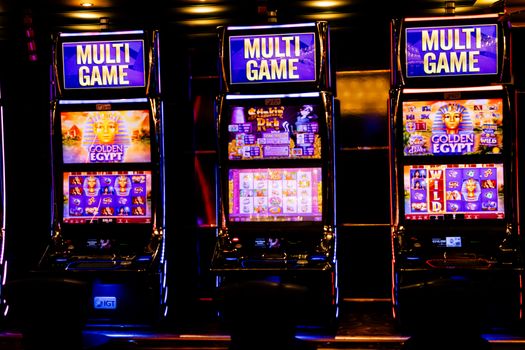
The Role of AI in Reshaping the Casino Industry
From the spinning roulette wheels on the Las Vegas Strip to the immersive digital experiences of online casinos, the gambling world is in a state of rapid transformation. One of the most powerful forces behind this evolution is Artificial Intelligence (AI). No longer the stuff of science fiction, AI is now at the heart of casino operations, enhancing everything from customer experience to fraud detection. As technology advances, AI’s influence on the casino industry continues to grow, promising a future that’s smarter, safer, and more engaging for players and operators alike.
AI-Powered Personalization: Tailoring the Casino Experience
Personalization is a buzzword in many industries, but in casinos, it’s becoming a game changer. AI systems analyze vast amounts of player data—such as betting patterns, game preferences, and time spent on specific games—to create highly customized experiences.
For example, AI-driven recommendation engines in online casinos can suggest new games based on a player’s past activity, much like Netflix does with movies. Land-based casinos are also reaping the benefits. Facial recognition, powered by AI, can identify VIP guests as they enter, triggering personalized service and tailored promotions.
.png)
According to a 2023 report by Grand View Research, the global market for AI in gaming is projected to reach $8.3 billion by 2027, fueled largely by the demand for enhanced, personalized experiences. Casinos leveraging AI for personalized marketing have reported increases in player engagement of up to 30%.
Enhancing Security and Fraud Detection with AI
Casinos handle enormous sums of money every day, making them prime targets for fraud and cheating. AI has revolutionized casino security, allowing operators to proactively detect suspicious activity.
Modern surveillance systems use AI-powered video analytics to monitor casino floors in real-time. For example, these systems can identify unusual behavior, such as card counting or chip theft, far more accurately and quickly than human surveillance teams. In 2020, Caesars Entertainment reported a 25% reduction in incidents of fraud after implementing an AI-based monitoring system.
Online casinos also benefit from AI-driven fraud detection. Machine learning algorithms analyze thousands of transactions per second, flagging anomalies that could indicate cheating, money laundering, or account takeovers. This level of scrutiny is simply impossible to achieve with manual monitoring.
Smart Game Development: How AI Is Creating New Casino Experiences
AI is not only optimizing operations—it’s also transforming the games themselves. Developers use AI to generate new content, refine game mechanics, and even design dynamic difficulty levels that adapt to a player’s skill.
For instance, slot machine companies like Scientific Games have begun using AI to analyze player feedback and in-game behavior to develop more engaging and profitable titles. AI-driven testing can simulate millions of spins to ensure mathematical fairness and optimal entertainment value.
Moreover, AI is paving the way for “smart” dealers in live casino games. These virtual dealers use natural language processing to interact with players in real-time, creating a more social and immersive experience. By 2025, it’s estimated that over 60% of online casinos will offer some form of AI-powered live gaming.
Responsible Gambling: AI as a Tool for Player Protection
While casinos are designed for entertainment, problem gambling is a serious concern. AI is emerging as a powerful ally in promoting responsible gambling and protecting vulnerable players.
Advanced algorithms can detect early warning signs of problematic behavior, such as chasing losses, erratic betting patterns, or extended play sessions. Once flagged, the system can trigger interventions—ranging from gentle reminders to take a break, to more direct outreach from responsible gambling teams.
In 2022, Kindred Group, a major online gambling operator, reported a 75% increase in successful player interventions after deploying AI-based monitoring tools. These tools are not only effective but also scalable, helping casinos meet rising regulatory requirements for player protection.
Operational Efficiency: Automating and Optimizing Casino Management
Behind the scenes, AI is driving efficiency across casino operations. From optimizing staffing schedules to managing inventory and forecasting demand, AI-based systems are reducing costs and improving decision-making.
For example, predictive analytics can forecast busy periods on the gaming floor, enabling casinos to adjust staffing levels and reduce wait times at popular tables. AI-powered chatbots handle customer queries around the clock, freeing up human staff for more complex interactions.
A 2021 study by McKinsey found that AI-driven automation can reduce operational costs in casinos by up to 20%. Not only does this improve profitability, but it also enhances the overall guest experience by ensuring services are responsive and seamless.
Comparing Traditional and AI-Driven Casino Operations
To better understand the impact of AI, let’s compare traditional casino management approaches with AI-powered methods across key operational areas.
| Aspect | Traditional Approach | AI-Driven Approach |
|---|---|---|
| Customer Personalization | Basic loyalty programs, manual player profiling | Real-time data analysis, personalized offers and recommendations |
| Fraud Detection | Manual surveillance, after-the-fact investigation | Real-time video analytics, predictive transaction monitoring |
| Game Development | Manual testing, fixed difficulty levels | AI-driven simulation, adaptive game mechanics |
| Responsible Gambling | Reactive support, generic interventions | Proactive detection, personalized assistance |
| Operational Efficiency | Fixed schedules, manual inventory management | Predictive analytics, automated resource allocation |
The Future of AI in the Casino World
The integration of AI in casinos is still in its early stages, but its influence is growing rapidly. In the coming years, we can expect even more sophisticated AI applications, such as real-time translation for international guests, emotion recognition to gauge player satisfaction, and hyper-personalized marketing campaigns.
Some experts predict that by 2030, AI could help casinos reduce customer churn by as much as 50% through improved engagement and tailored experiences. Meanwhile, advances in explainable AI will help operators comply with increasingly stringent regulations, providing transparent decision-making processes for both players and regulators.
The convergence of AI with other emerging technologies, such as blockchain and augmented reality, promises to create entirely new forms of entertainment and security. As the casino industry embraces these innovations, the ultimate winners will be players, who can look forward to safer, fairer, and more enjoyable gaming experiences.