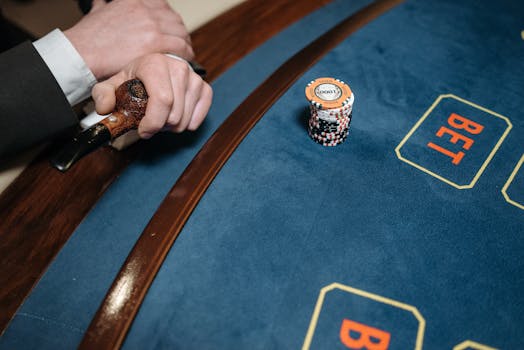
The world of high-stakes poker has long captivated audiences with its combination of skill, psychology, and dizzying sums of money. While the glittering lights and dramatic showdowns of casino poker rooms are what most people imagine, the reality of high-stakes poker extends far beyond the velvet-roped tables of Las Vegas or Monte Carlo. Over the past two decades, the game has evolved into a complex, global phenomenon where private games, online platforms, and underground networks play just as big a role as traditional casinos. In this article, we’ll explore the multifaceted world of high-stakes poker, examining its transformation, the players who dominate the scene, the psychological and financial pressures involved, and how technology is reshaping the game for a new generation.
The Evolution of High-Stakes Poker: From Casino Floors to Global Arenas
Poker’s roots stretch back centuries, but the “high-stakes” scene as we know it is a much more recent development. Throughout the 20th century, high-stakes games were mostly the domain of smoky backrooms or roped-off areas in major casinos. The World Series of Poker (WSOP), established in 1970, helped to bring high-stakes poker into the public eye, especially with the introduction of the $10,000 Main Event.
However, the real explosion came with the advent of televised poker in the early 2000s. The 2003 WSOP, won by amateur Chris Moneymaker—who qualified via a $39 online satellite—sparked the so-called “Poker Boom.” Suddenly, millions of viewers were able to watch high-stakes hands play out in real time, complete with players’ hole cards revealed for the first time thanks to innovative camera technology.
.png)
Today, high-stakes poker is no longer confined to the casino. It exists in a constellation of environments:
- Private games in luxury homes, hotels, and yachts - Online rooms where pots can exceed $1 million in a single hand - International tournaments with buy-ins ranging from $25,000 to $1,000,000 - Underground games in major cities, often invitation-only and shrouded in secrecyAccording to the Global Poker Index, there were over 1,800 live poker tournaments worldwide in 2023 with buy-ins of $5,000 or more, showing just how widespread the high-stakes game has become.
The Players: Legends, Newcomers, and the Rise of “Pokerpreneurs”
The high-stakes world features a fascinating mix of personalities. While the public may recognize names like Phil Ivey, Daniel Negreanu, or Patrik Antonius, the current landscape is filled with lesser-known but equally formidable players who often prefer anonymity.
There are generally three main archetypes in high-stakes poker:
1. The Old School Pros Legends such as Doyle Brunson and Johnny Chan made their mark in the smoky rooms of Las Vegas, relying on sharp instincts and decades of experience. Many still play, often transitioning to private games or invitation-only tournaments. 2. Online Wizards A new generation of players honed their craft online, where the sheer volume of hands played accelerates learning. Players like Viktor "Isildur1" Blom and Fedor Holz burst onto the scene by crushing online cash games and tournaments with aggressive, mathematically-driven strategies. 3. The “Pokerpreneurs” Entrepreneurs, hedge fund managers, and celebrities increasingly inhabit the high-stakes scene. These players, such as Bill Perkins or Dan Bilzerian, often bring vast personal fortunes and a flair for the dramatic, hosting exclusive games in exotic locales.The mix of backgrounds creates an environment where psychological warfare is as important as technical skill. In 2022, the biggest single online cash game pot ever recorded was $1.978 million, played between two relatively unknown players, highlighting how the field constantly shifts and surprises.
Private Games and the Allure of the Underground
While casino tournaments and cash games are open to all with the bankroll to buy in, the true heart of high-stakes poker increasingly beats in private games. These exclusive gatherings, often organized in luxury suites or secluded mansions, offer not just high financial stakes but an atmosphere tailored to the whims of wealthy hosts and their guests.
Private games can feature:
- Minimum buy-ins of $250,000 or more - Custom rules, high levels of security, and sometimes even hired professional dealers - Players from industries as diverse as tech, finance, sports, and entertainmentThe appeal is multifaceted: privacy, the chance to play against rich amateurs rather than hardened pros, and the opportunity for networking or deal-making outside of poker. However, private games come with risks—soft collusion, lack of regulatory oversight, and the potential for disputes over debts.
Underground games, especially in cities like New York, London, and Macau, have a storied reputation. These games can run for days, fueled by enormous sums of money and attended by billionaires, movie stars, and the occasional criminal.
A famous example is the so-called “Molly’s Game” ring, operated by Molly Bloom, which reportedly saw pots exceeding $4 million and included A-list Hollywood actors among its players. The allure and danger of these games have inspired numerous books and movies, cementing their place in poker lore.
Online High-Stakes Poker: Virtual Tables, Real Fortunes
The digitization of poker has had profound effects on the high-stakes scene. Online poker platforms such as GGPoker, PokerStars, and partypoker now regularly host cash games and tournaments with six- or seven-figure buy-ins. The convenience and speed of online play have led to a new breed of high-stakes regulars who may never set foot in a casino.
Key numbers illustrate the scale of online high-stakes poker:
- In 2021, GGPoker hosted the largest-ever online tournament, the WSOP Online Main Event, with a $27.5 million prize pool and a $5,000 buy-in. - The largest online cash game pot, as mentioned earlier, was nearly $2 million. - According to Poker Industry PRO, high-stakes online tables ($200/$400 and above) run 24/7, with hundreds of players from more than 50 countries.The online format has also created opportunities for stakers and backers—investors who buy a share in a player’s action, spreading risk and reward. This has made it possible for talented players with limited bankrolls to compete at the highest levels, provided they can attract financial support.
The Psychological and Financial Pressures of High-Stakes Play
High-stakes poker is not just a game of cards—it’s a test of nerves, discipline, and resilience. The swings in high-stakes games are enormous; even the best players can experience weeks or months of losing millions, only to recover with a single big win.
According to a 2020 study by the University of Nevada, professional high-stakes poker players report stress levels comparable to top athletes and stock traders. The pressure to perform, fear of going broke, and the isolation that comes from playing in elite circles can take a toll on mental health.
Financially, the stakes are daunting. The table below offers a comparison of the typical buy-ins and potential pots across different high-stakes environments:
| Game Type | Typical Buy-in | Average Pot Size | Notable Example |
|---|---|---|---|
| Casino High-Stakes Cash Game | $100,000 - $500,000 | $50,000 - $500,000 | Bobby’s Room, Bellagio ($200/$400 to $2,000/$4,000 blinds) |
| Private/Underground Game | $250,000 - $1,000,000+ | $100,000 - $2,000,000 | Molly’s Game (reported $4M pots) |
| Online High-Stakes Cash Game | $40,000 - $200,000 | $100,000 - $1,000,000 | GGPoker ($500/$1,000 blinds, $1.978M pot in 2022) |
| Major Tournament (Live/Online) | $10,000 - $1,000,000 | Varies (Prize pools $10M+) | WSOP, Triton Super High Roller Series |
The psychological pressures are exacerbated by the public nature of many games. A misstep in a televised event or viral online hand can haunt a player’s reputation for years. To cope, many top pros employ coaches, sports psychologists, and even meditation techniques to stay at the top of their game.
Technology, Security, and the Future of High-Stakes Poker
The future of high-stakes poker is being shaped by technology in dramatic ways. Advanced analytics, artificial intelligence, and real-time data mining have made the game more competitive and complex than ever.
- Real-time solvers: Programs like PioSOLVER allow players to analyze hands and strategies with near-perfect accuracy, leading to more “game theory optimal” (GTO) play at the highest levels. - Security measures: Online platforms use advanced encryption, multi-factor authentication, and anti-collusion software to protect both players and games. - Streaming and content creation: Platforms like Twitch and YouTube have turned high-stakes poker into a form of entertainment with global audiences. Players like Lex Veldhuis and Jason Somerville attract tens of thousands of viewers per session.The next frontier may be virtual reality poker rooms, where players can interact in immersive digital environments. This could further blur the lines between live and online play, making high-stakes games more accessible while also raising new challenges for security and integrity.
High-Stakes Poker: More Than Just a Game
High-stakes poker has moved far beyond the casino, evolving into a global, multifaceted phenomenon that encompasses private luxury, online innovation, and a level of psychological warfare unmatched in most other games. Whether played in the glitzy back rooms of Las Vegas, the secrecy of a billionaire’s yacht, or the digital battlegrounds of the internet, high-stakes poker offers the ultimate test of skill, nerve, and adaptability.
For those who participate, it is as much about personal challenge and reputation as it is about money. The stakes, both financial and emotional, are immense—and the game shows no signs of slowing down. As technology and society continue to evolve, so too will the world of high-stakes poker, ensuring its place as one of the most fascinating arenas in modern entertainment and competition.