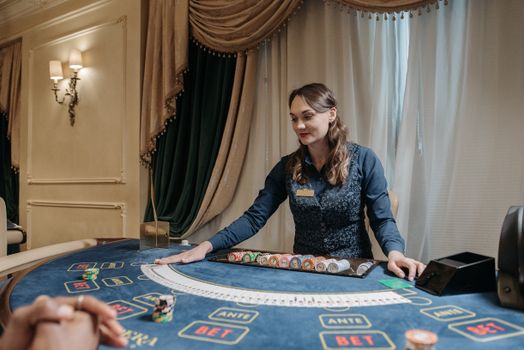
The Changing Role of the Croupier in Modern Casinos: Tradition Meets Technology
Casino floors have long been defined by the presence of croupiers—the immaculately dressed professionals who spin roulette wheels, deal cards, and orchestrate the action at table games. Once seen as the very heart of the casino experience, the croupier’s role is evolving rapidly as technology, regulation, and player expectations reshape the gambling landscape. Today’s croupiers are adapting to hybrid environments, new responsibilities, and sophisticated digital tools, all while maintaining the essential human touch that has made casino gaming so popular for generations.
In this article, we explore how the croupier’s job has changed, the skills now required, what the future holds, and how the role compares across traditional, online, and hybrid casino settings. Whether you’re a gaming enthusiast, a prospective croupier, or simply curious about the industry’s transformation, read on for an in-depth look at this fascinating evolution.
The Traditional Role of the Croupier: A Foundation of Trust and Entertainment
For decades, croupiers have been the face of the casino. Historically, their primary duties revolved around managing table games—dealing cards in blackjack and baccarat, spinning the roulette wheel, overseeing bets, and ensuring fair play. More than just game operators, croupiers acted as entertainers and customer service representatives, setting the tone for a fun and trustworthy gaming environment.
.png)
Key aspects of the traditional croupier’s role included:
- Ensuring game integrity and adherence to rules - Handling chips and cash accurately - Providing entertainment and social interaction - Resolving disputes and maintaining a smooth table atmosphereIn the early 2000s, croupiers in Las Vegas were required to complete up to 12 weeks of formal training, and the job often demanded high levels of concentration and mathematical skill. With more than 100,000 croupiers employed worldwide by the late 2010s, these professionals were essential to both the casino’s reputation and its bottom line.
Technological Advancements: Automation, Live Casinos, and Digital Tools
The new millennium brought significant technological changes to the casino industry, fundamentally altering the environment in which croupiers work. Automated shuffling machines, digital betting interfaces, and surveillance systems have all contributed to a faster, more secure gaming experience. Perhaps the most transformative development has been the rise of online and live dealer casinos.
Live dealer platforms—first launched around 2007—allow players to participate in real-time games from anywhere, interacting with human croupiers via high-definition video streams. In 2023, the live casino market was estimated at $5.6 billion globally, growing at over 8% annually. This shift has created new job opportunities for croupiers, who now operate in studios equipped with cameras, microphones, and digital interfaces rather than on bustling casino floors.
Modern croupiers must now be comfortable with:
- Operating touchscreens and digital scoreboards - Managing multiple camera angles and audio feeds - Interacting with online players via chat - Adhering to complex security and data privacy requirementsSome casinos have also introduced fully automated table games, where the dealer is replaced by a robotic arm or computer script. While these innovations improve efficiency and reduce human error, they also limit the traditional social interaction that many players cherish.
Expanding Skill Sets: From Mathematics to Customer Engagement
The croupier’s job is no longer just about shuffling cards and spinning wheels. As the industry adapts to new technology and increasingly sophisticated players, the required skill set has broadened considerably.
Today’s croupiers are expected to:
- Master complex game rules and side bets across multiple variations - Understand and troubleshoot digital gaming systems - Deliver high-quality customer service both in person and online - Adapt to multicultural audiences and communicate in multiple languages - Recognize and respond to signs of problem gamblingAccording to a 2022 survey by the European Casino Association, 67% of casino operators now prioritize digital literacy and multilingualism when hiring croupiers. Some venues even offer specialized training in public speaking, on-camera presence, and customer psychology.
Consider the following comparison of classic vs. modern croupier skill sets:
| Skill Area | Classic Croupier | Modern Croupier |
|---|---|---|
| Game Knowledge | Standard rules for main table games | In-depth rules, side bets, and variant games |
| Technology Use | Manual chips/cards handling | Digital interfaces, live streaming equipment |
| Customer Interaction | Face-to-face only | Face-to-face and online/chat-based |
| Security & Compliance | Basic game integrity | Data privacy, anti-fraud systems |
| Languages | Often just local language | Multilingual preferred |
Croupiers in Online and Hybrid Casinos: Blending Real and Virtual Worlds
As online gambling continues to surge, the croupier’s role is being reimagined for virtual spaces. Live dealer games have bridged the gap between digital convenience and the authentic casino experience, providing players with the thrill of a real-time, human-hosted game from their smartphones or computers.
In these settings, croupiers work from specialized studios rather than traditional casino floors. The physical card decks and wheels remain, but outcomes are tracked by optical character recognition (OCR) technology, and player bets are placed electronically. According to Evolution Gaming, the world’s largest live dealer provider, over 8,000 croupiers are currently employed in live casino studios across Europe and Asia.
Hybrid casinos, which combine physical venues with interactive online play, are also on the rise. These establishments allow players on the casino floor and remote participants to join the same game, with croupiers managing both audiences simultaneously. This convergence demands even greater adaptability and technical proficiency.
The Human Element: Why Croupiers Still Matter
Despite the march of automation and the convenience of online gambling, croupiers remain a vital part of the casino experience. Their presence reassures players, ensures fairness, and injects personality into every game. In fact, a 2021 survey by the UK Gambling Commission found that 61% of casino visitors valued human interaction as a key reason for choosing live games over digital-only alternatives.
Croupiers also play a crucial role in responsible gambling efforts. Trained to spot signs of distress or problematic behavior, they can intervene or alert supervisors when necessary—a function that technology alone cannot replicate.
Moreover, for high-stakes and VIP players, the croupier’s ability to deliver personalized service, read the room, and create a memorable experience is often as valuable as the games themselves. In Macau, the world’s largest gambling hub, top croupiers can earn up to $50,000 annually with tips and bonuses, highlighting the importance and esteem of the profession.
Challenges and Opportunities for the Modern Croupier
The changing nature of the croupier’s role brings both challenges and opportunities. While automation may reduce demand for traditional table game dealers, the growth of live and hybrid casinos is creating new career paths. The need for advanced training, digital competence, and multilingual skills is higher than ever.
Casinos are responding by investing in professional development and upskilling programs. In 2023, the European Casino Association reported a 23% increase in training budgets for croupiers, focusing on areas such as customer engagement, technology use, and regulatory compliance.
On the flip side, the job’s demands have intensified. Irregular hours, performance pressure, and the need to constantly adapt to new technology can be stressful. Yet, for those who thrive in dynamic, people-oriented environments, the role remains rewarding and full of potential.
The Future of the Croupier: Adaptation in a Digital Age
As casinos continue to innovate, the croupier’s role will undoubtedly evolve further. We can expect to see:
- Greater integration of augmented and virtual reality in live dealer games - Expansion of hybrid casino models, blending on-site and remote play - Increased use of artificial intelligence to support (but not replace) human croupiers - Enhanced training programs focusing on soft skills and technologyUltimately, the croupier of tomorrow will be a hybrid professional: part entertainer, part technician, and always a trusted steward of the gaming experience.